
Guides · Relocating
Nairobi Weather and Climate: What to Expect and Pack (2026)
Nairobi Weather and Climate: What to Expect and Pack (2026)

Nairobi has some of the most comfortable weather of any major city on earth, and almost nobody moving here expects it. You picture equatorial Africa and pack for heat. Then you land, the evening turns cool, and you wish you’d brought a sweater. The city sits nearly 1,800 metres up, and that altitude does something lovely to the climate: it takes the edge off the equator.
This guide is for Americans planning a move to Nairobi who want to know what the weather is actually like — month by month, not just “warm and sunny.” By the end you’ll know the temperature you’ll feel, when the rains come, why the sun is stronger than it looks, the best months to arrive, and exactly what to put in your suitcase.
We’ll keep it honest. The weather here is genuinely easy, but “no real winter” surprises people in both directions — there’s no cold snap to dread, and no proper summer heat either. Plan for mild, and pack a layer.
Quick answer
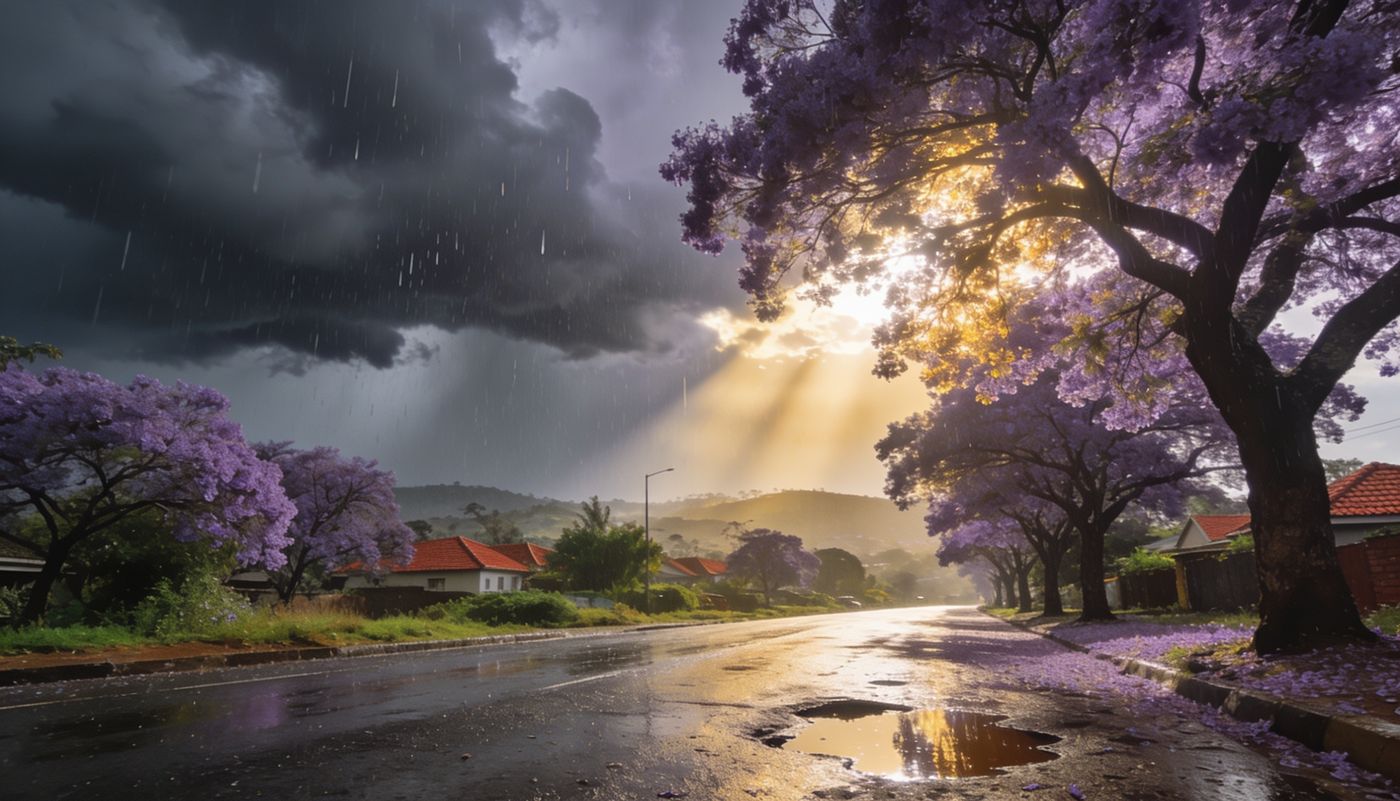
Nairobi’s climate is mild and spring-like all year because of its high altitude. Daytime highs sit in the low-to-mid 20s Celsius (low-to-mid 70s Fahrenheit) most of the year, peaking around 28°C (82°F) in January and February and dipping to about 22°C (72°F) in July. Nights are cool year-round — roughly 12–17°C (54–63°F). There are two rainy seasons: the “long rains” from March to May (April is wettest) and the lighter “short rains” from roughly October to December. Rain usually comes as afternoon or evening downpours, not all-day drizzle. The sun is strong because you’re high up and near the equator, so you’ll want sunscreen year-round. There’s no real winter and no real summer — just a warm-dry stretch, two rainy stretches, and a cool-grey stretch in mid-year. The best months to arrive are the dry seasons: January–February or June–September.
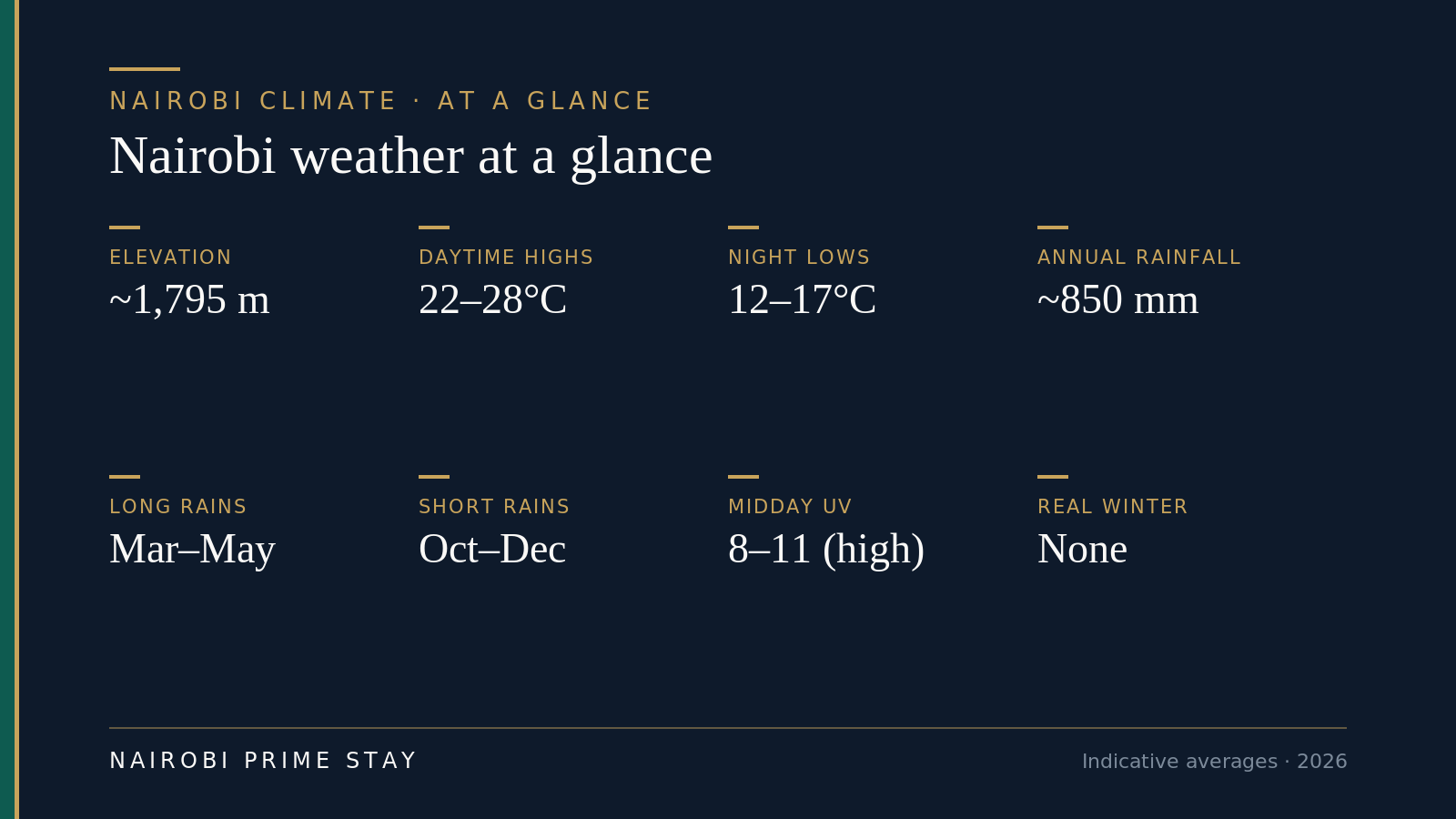 Nairobi at a glance — indicative averages for 2026; a given day always varies.
Why this matters
Weather shapes your first month more than you’d think. It decides what you ship versus buy, when your move is least painful, and whether your apartment needs a backup plan for chilly July evenings. Get it wrong and you arrive in the long rains with summer clothes and no umbrella, stuck in flooded traffic on your first commute. Get it right and the climate becomes one of the quiet joys of living here — the reason people sit outside year-round and call this the “Green City in the Sun.”
It also affects health in small ways newcomers miss: the high-altitude sun burns faster than it feels, and the dry, dusty months can irritate allergies. None of it is dramatic. All of it is easy to plan for once you know what’s coming.
Why Nairobi’s weather is so mild: it’s the altitude
The single fact that explains Nairobi’s climate is its elevation: about 1,795 metres, or nearly 5,900 feet — over a mile above sea level. Nairobi sits almost on the equator, which would normally mean serious heat. The altitude cancels most of it out. As a rule, the air cools by roughly 6–7°C for every 1,000 metres you climb, and that’s why a city this close to the equator feels more like a temperate highland in spring.
The result is a climate with very little swing. There are no four seasons in the way Americans know them — no snow, no heatwave, no months of darkness. Day length barely changes, because you’re on the equator: it’s light from roughly 6:30am to 6:30pm all year, with quick tropical sunsets and almost no twilight. What changes through the year is mostly the rain and the cloud, not the temperature.
A few practical knock-ons of living a mile high:
- The sun is intense. Thinner atmosphere plus an equatorial angle means strong UV. More on that below.
- A few people feel the altitude for a week. Mild breathlessness on a jog, faster dehydration, the odd headache. It’s nowhere near the altitude of Cusco or La Paz, and most people notice nothing. Drink more water than usual at first.
- Evenings are cool. Once the sun drops, the thin highland air loses heat fast. This is the part people underpack for.
Temperatures month to month: there’s no real summer or winter
Here’s the surprise that defines Nairobi’s weather: the temperature is remarkably steady, and it never gets truly hot or truly cold. Average highs move only about 6°C across the entire year. The warmest stretch is the dry, sunny period of January and February, when afternoons reach about 28°C (82°F) under clear skies. The coolest is July, the heart of the cloudy mid-year season, when highs sit around 22°C (72°F) and feel cooler under grey skies.
Nights are the thing to plan for. They’re cool all year — typically 12–17°C (54–63°F) — and in June, July and August they can dip enough that a fleece and a hot drink feel good indoors. Very few Nairobi homes have central heating, so a cool July evening is felt inside as well as out. It’s never a hard freeze; it’s just cooler than a first-time visitor expects from “equatorial Africa.”
Here are indicative monthly averages to plan around. Treat them as rounded guides, not forecasts — a given day varies, and weather stations around the city differ by a degree or two.
| Month | Avg high | Avg low | Rain | What it feels like |
|---|---|---|---|---|
| January | 28°C / 82°F | 13°C / 55°F | Low | Warm, sunny, dry |
| February | 28°C / 82°F | 14°C / 57°F | Low | Hottest, clear skies |
| March | 27°C / 81°F | 15°C / 59°F | Rising | Warm; long rains begin |
| April | 25°C / 77°F | 15°C / 59°F | Highest | Wettest month of the year |
| May | 23°C / 73°F | 14°C / 57°F | Moderate | Cooler; rains easing |
| June | 22°C / 72°F | 12°C / 54°F | Low | Cool, dry, often grey |
| July | 22°C / 72°F | 12°C / 54°F | Low | Coolest month |
| August | 23°C / 73°F | 12°C / 54°F | Low | Cool, starting to brighten |
| September | 25°C / 77°F | 13°C / 55°F | Low | Warming, sunny |
| October | 26°C / 79°F | 14°C / 57°F | Rising | Short rains begin |
| November | 24°C / 75°F | 15°C / 59°F | Moderate | Showery; short-rains peak |
| December | 25°C / 77°F | 14°C / 57°F | Low–moderate | Warm, festive, the odd shower |
How does Nairobi’s weather compare to US cities?
No single US city is a perfect match, but the closest feeling is a permanent, mild spring. If you know San Diego, you’re close on the mildness — comfortable days, no real extremes — except Nairobi’s nights run cooler and it has two proper rainy seasons instead of a dry Mediterranean summer. Nairobi’s grey, cool July feels a lot like San Francisco’s foggy summer: mid-60s to low-70s, overcast, and you reach for a jacket in a city everyone assumes is warm. The strong sun and big day-to-night temperature swing will remind a Coloradan of Denver, because both sit over a mile high — minus Denver’s snow and hot summers. And the one thing Nairobi is not is Miami: it’s never the sticky, sea-level tropical heat most people picture when they think “equatorial Africa.”
Here’s the honest side-by-side. Treat the numbers as rounded climate normals, not forecasts.
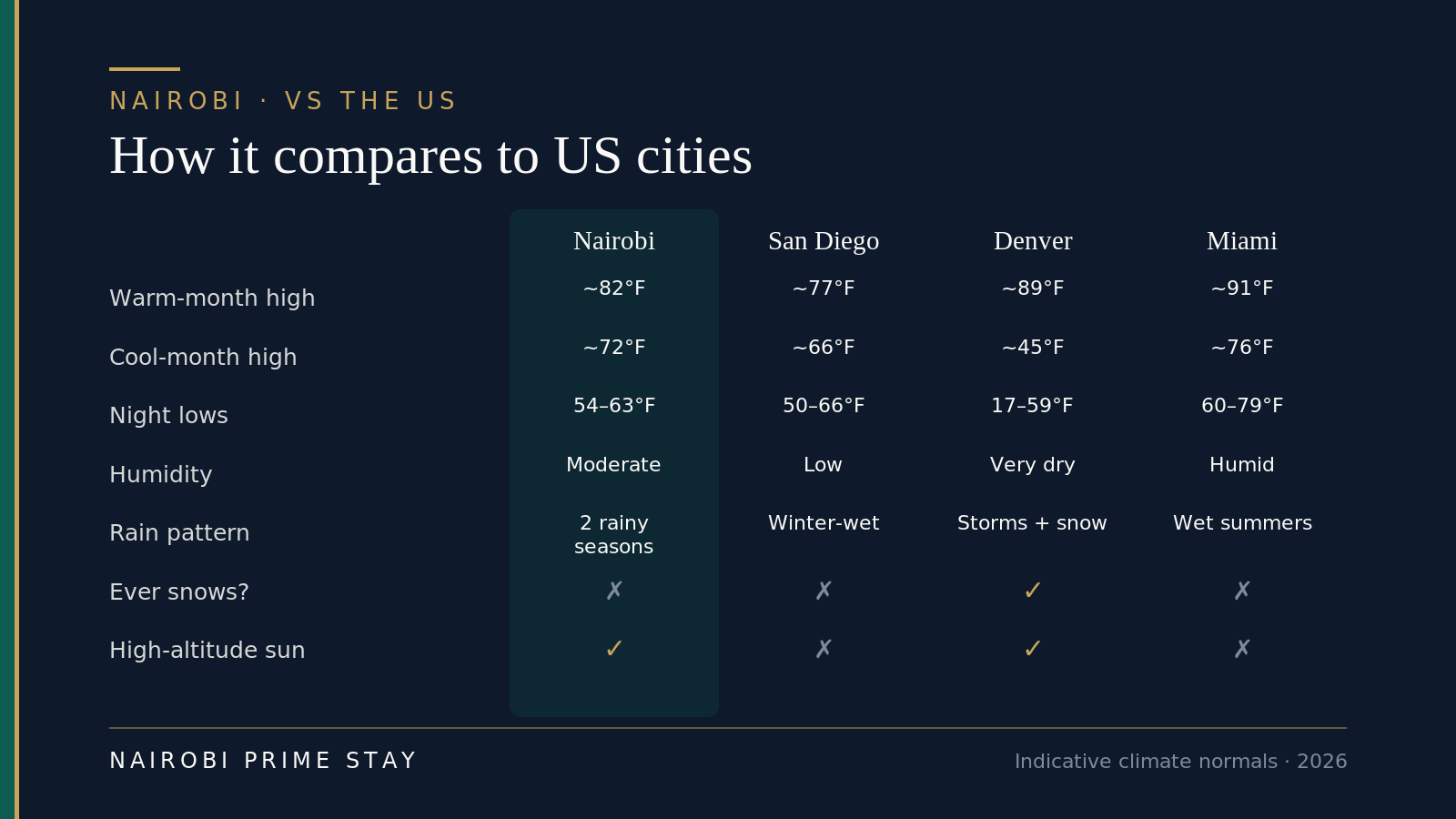 No US city matches exactly — Nairobi is milder than Miami, cooler at night than San Diego, and shares Denver’s altitude sun without the snow.
| Feature | Nairobi | Closest US feel |
|---|---|---|
| Overall | Mild, spring-like all year | San Diego, but cooler nights |
| The grey season (Jun–Aug) | Cool, overcast, low-70s days | San Francisco’s foggy summer |
| Sun and altitude | Strong UV, big day-night swing | Denver, minus the winter |
| What it’s not | No sticky tropical heat | The opposite of Miami |
The practical takeaway: pack and plan the way you would for a mild, sunny, high-altitude place with a cool grey patch and two rainy spells — not for the tropics. Whichever neighborhood you choose, the weather feels much the same across the city; altitude, not location, sets the tone.
The two rainy seasons: long rains and short rains
Nairobi has two wet seasons and two drier ones, and knowing the pattern is most of what you need. The long rains run from about March to May, with April the wettest month of the year. The short rains come later, from roughly October to December, usually peaking in November. Between and around them are the dry seasons: the cool, grey dry stretch of June to September, and the warm, sunny dry stretch of January and February.
The good news for daily life: Nairobi rain rarely ruins a whole day. It tends to arrive as a heavy afternoon or evening downpour — sometimes dramatic, with thunder — and then clear. Mornings are often bright even in the wet season, which is why locals run errands early. An all-day grey drizzle is more a feature of the cool July season than of the rains themselves.
What the rains do change is the ground and the roads. Nairobi’s drainage struggles with a real downpour, so streets flood quickly, traffic seizes up, and an unpaved shortcut turns to mud. If you’re house-hunting or starting a job in April, build in extra time and expect your commute to double on a bad afternoon. Our guide to driving in Nairobi goes deeper on rainy-season traffic and the routes to avoid. The flip side is beautiful: a week into the rains, the whole city goes green, the dust settles, and the gardens explode.
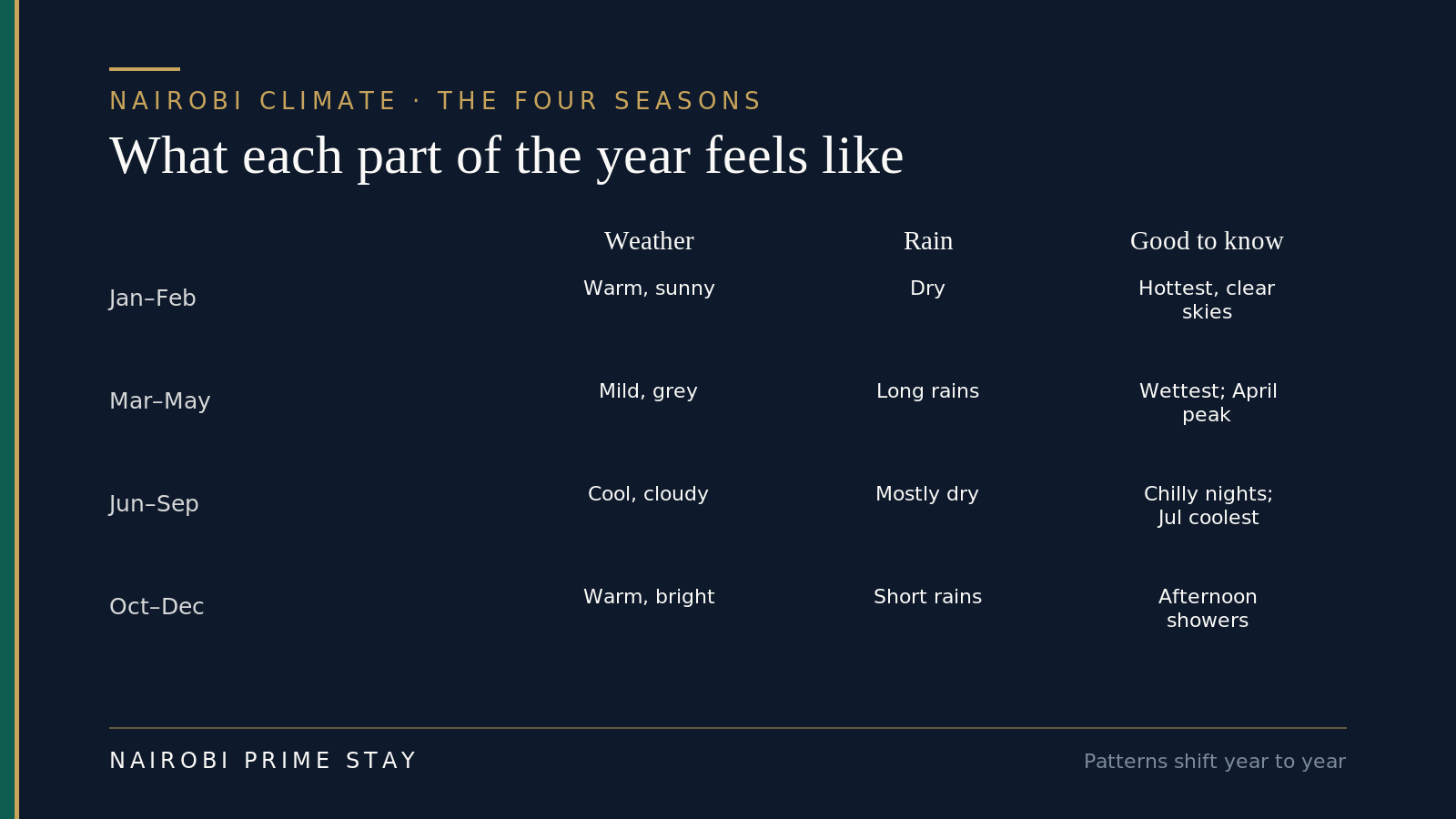 The year in four parts. Patterns shift from year to year, so treat the dates as a guide.
Are the rains still reliable? El Niño, La Niña and a changing climate
The two-season rhythm still holds, but the rains have grown less predictable, and 2026 is a good example. The broad pattern — long rains around March to May, short rains around October to December — is what you should still plan around. What’s changed is the timing and the intensity. Some years the rains start late or fizzle into drought; other years they arrive as sudden, violent downpours that overwhelm the city’s drains. Kenya swings between these extremes more sharply than it used to, driven partly by the El Niño and La Niña cycles in the Pacific and a warming climate.
2026 has leaned wet and dangerous. The long rains peaked in April as usual, but the season turned deadly: flash flooding in and around Nairobi in March and April killed dozens of people and displaced tens of thousands of households across the country. Looking ahead, the Kenya Meteorological Department has issued an El Niño alert — a drier-than-usual mid-year, then a wetter-than-normal short-rains season toward the end of 2026, with a real risk of heavy flooding. Before each season, it’s worth a two-minute check of the official seasonal outlook and flood warnings the Kenya Meteorological Department publishes at meteo.go.ke.
Here’s the honest, balanced picture for someone moving here. The worst of the flooding hits low-lying informal settlements and homes built on riverbanks and old flood plains — not the leafy, higher-ground western suburbs where most expats live. Those areas drain far better and rarely flood inside the home. But everyone’s commute suffers on a bad afternoon, and it’s a genuine reason to avoid renting anything beside a river or at the bottom of a valley. When you’re choosing where to live, factor in drainage and elevation — our safety guide covers the flood-prone spots to skip — and give yourself buffer time for getting around in April and November.
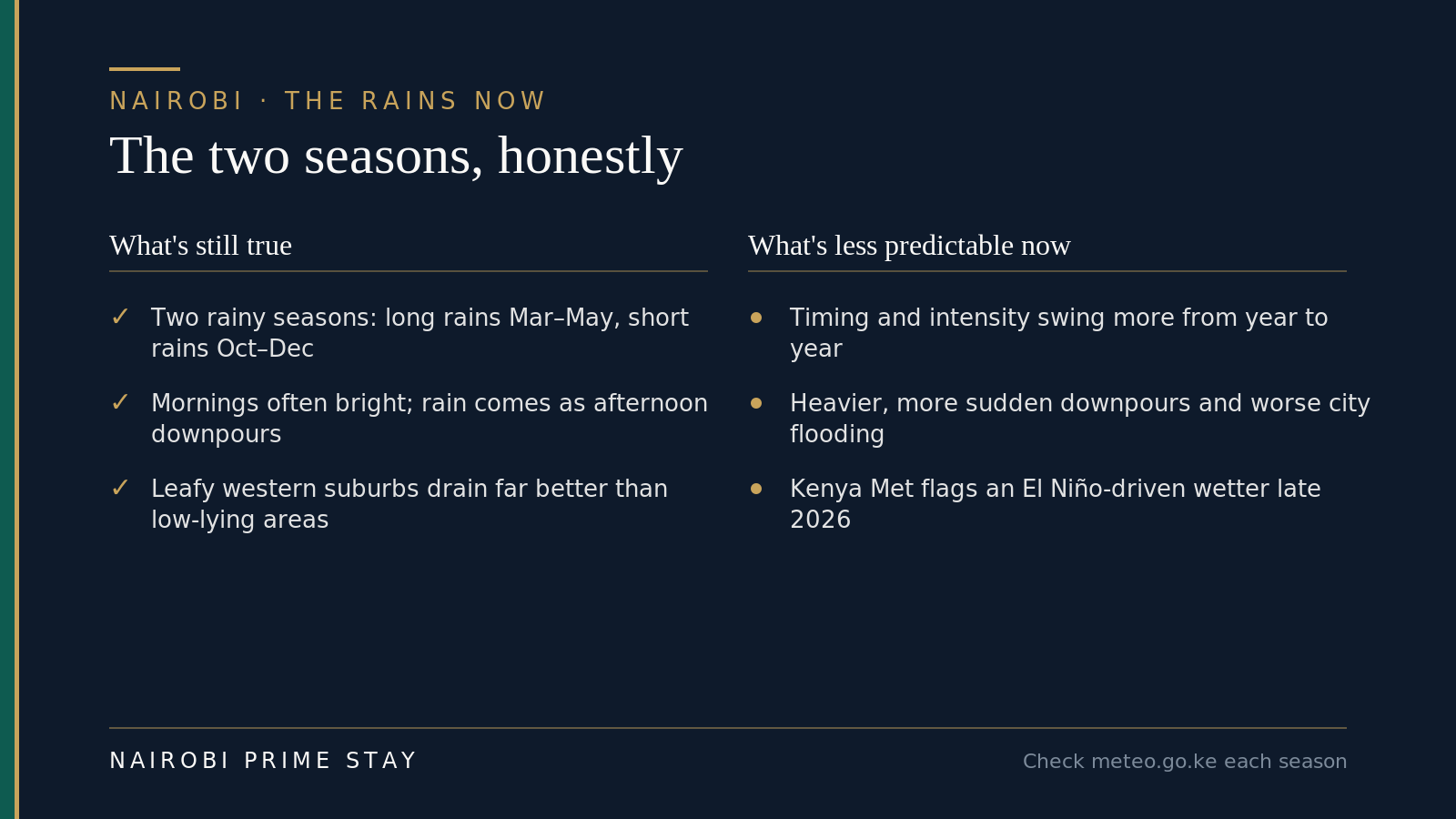 The rhythm holds, but the extremes are sharper — check the seasonal forecast before the rains.
The sun is stronger than it looks — and so is the UV
Respect the Nairobi sun. Because you’re a mile high and almost on the equator, the ultraviolet radiation here is genuinely strong — the midday UV index regularly sits in the 8–11 range, which is “very high” to “extreme” on the same scale used in Arizona or the Caribbean. The catch is that it doesn’t feel that way. The air is mild, often breezy, sometimes cloudy, so your skin isn’t warning you the way it does on a hot beach. People burn on cool, overcast days here all the time.
Treat sun protection as a year-round habit, not a summer one. Wear sunscreen on exposed skin daily, keep sunglasses and a hat handy, and remember that the strongest hours are roughly 11am to 3pm. High-SPF sunscreen is sold in Nairobi but the range is narrower and prices higher than in the US, so it’s worth packing your preferred brand. If you have skin that’s prone to sun damage, this is a real, practical reason to be diligent; our healthcare in Nairobi guide covers finding a dermatologist if you want a mole checked.
What about air quality?
Nairobi’s air quality is moderate — noticeably better than the world’s most polluted megacities, but not pristine. On a typical day the air sits in the “good” to “moderate” band, with fine-particle (PM2.5) readings that are a fraction of what cities like Delhi or Beijing record. The main sources are traffic exhaust and, in the dry months, dust. You’ll notice it most in heavy CBD traffic or behind an old diesel matatu, and least in the leafy western suburbs where most expats live, which act as the city’s green lungs.
If you have asthma or strong allergies, the things to watch are the dusty tail end of the dry seasons and the heavy pollen when everything blooms after the rains. Most people find it very manageable. A home in a greener area like Karen, Gigiri or Lavington — with gardens and tree cover — makes a real difference to the air you breathe day to day.
One altitude bonus: low malaria risk in the city
Here’s a genuine perk of living high up: Nairobi itself is low-risk for malaria. The mosquitoes that carry it don’t thrive at this altitude and these cool temperatures, so unlike much of tropical Africa, you don’t take daily anti-malarials just to live in the city. That changes the moment you descend. The coast, the Lake Victoria basin and most safari parks sit lower and warmer, and they are malaria areas — so for a weekend trip or a stint on the hot, humid coast you’ll want to plan prophylaxis and pack repellent. It’s not a reason to worry about the city; it’s a reason to talk to a travel clinic before you head down-country.
Power, water and the rainy season
Nairobi’s weather reaches into your home in two practical ways: power and water. A heavy storm often knocks out the electricity for a while — usually a short outage, occasionally a few hours — because wind and lightning trip the grid. It’s routine, not a crisis, and it’s exactly why most quality apartment buildings and every good serviced apartment run a backup generator that kicks in within seconds. Keep your devices charged during the rains, put a surge protector on anything expensive — the fridge, the TV, your laptop — and you’ll barely notice.
Water runs the other way. The dry seasons, especially the long dry stretch before the short rains, are when the city’s supply gets tight, and some areas see rationing or low pressure for a day or two. Again, most decent homes are built for it: a rooftop storage tank, and often a borehole on the compound, so your taps keep running even when the mains don’t. When you view a place, it’s a fair question to ask — is there a generator, a water tank, a borehole? — and a good building will have all three.
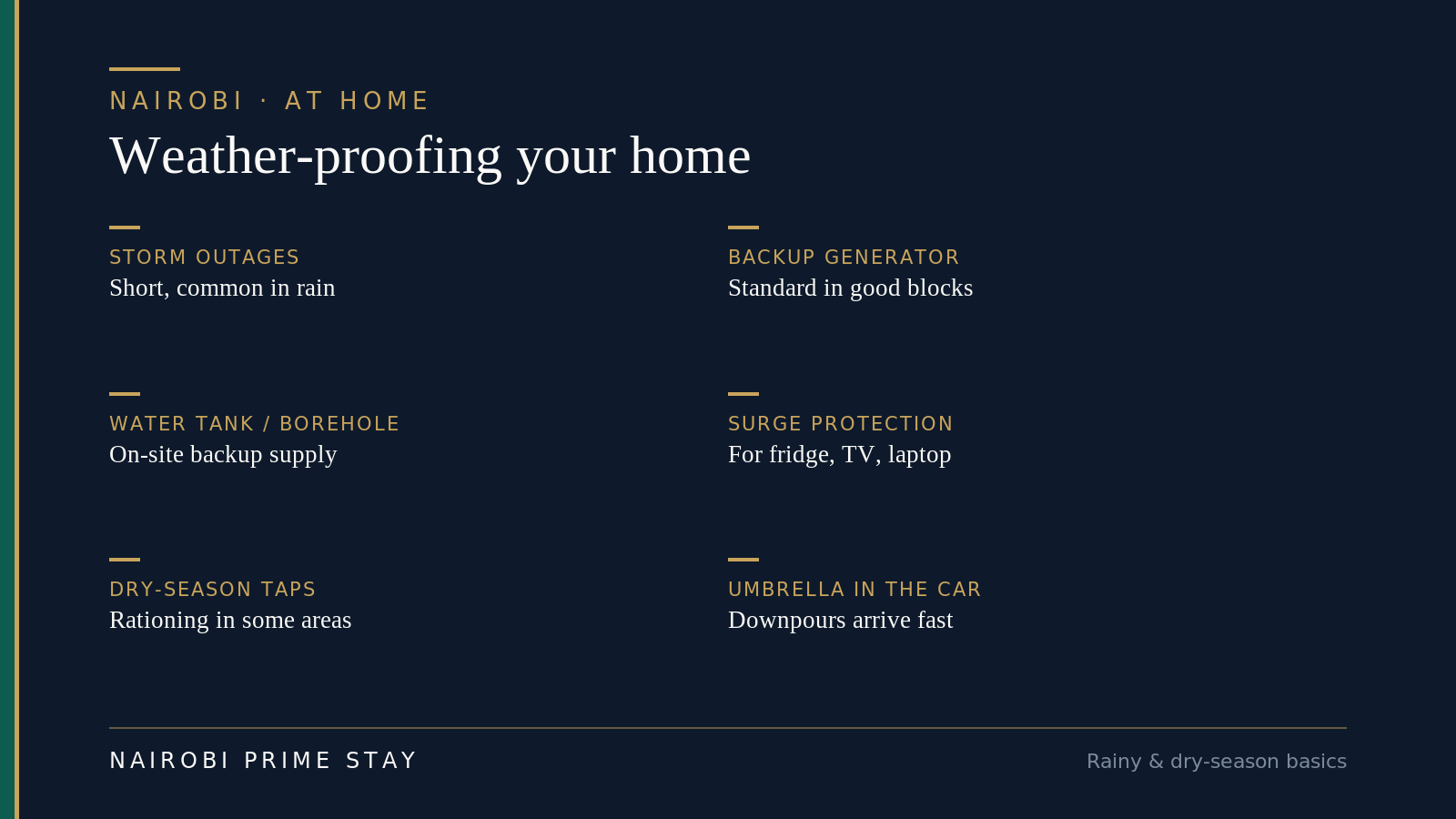 The weather touches power and water at home — good buildings are built for both.
None of this is unique to Nairobi, and none of it is a reason to worry. It’s just the practical reality of a city with two rainy seasons and a growing population. A well-run building smooths it out completely, which is one more reason a serviced apartment makes an easy first base while you learn how your own neighborhood behaves in a downpour.
The best time of year to move to Nairobi
If you can choose your timing, aim for a dry season — either January–February or June–September. Both give you clear, settled weather for the hardest parts of a move: viewing apartments, hauling boxes, testing your commute, and learning the city without an umbrella in one hand. The warm, sunny months of January and February are the most postcard-perfect; June to September is cooler and greyer but just as dry and easy for logistics.
The month to avoid for a move, if you have a choice, is April — the peak of the long rains, when flooding and traffic are at their worst. It’s livable, plenty of people land then, but it’s the least fun time to be carrying boxes up a driveway.
For families, the calendar usually beats the weather. Most international schools in Nairobi run an August-to-June year, so arriving in July or August lines your kids up with the start of term — and happily, that’s also a dry, easy stretch of weather. If you’re weighing school timing against everything else, our main moving to Nairobi guide walks through sequencing the whole move.
 Timing your move — weather is rarely the deciding factor, but a dry month makes everything easier.
What to pack for Nairobi’s climate
Pack for mild days and cool nights, with strong sun on top — not for tropical heat. The newcomer mistake is bringing a suitcase of shorts and tank tops and nothing warm. You’ll live in light layers: a t-shirt or shirt for the day, and a sweater, fleece or light jacket you add the moment the sun goes down.
The two things people most often wish they’d packed are a warm layer for the evenings and a packable rain jacket. Bring both. You won’t need a heavy winter coat, snow gear, or serious waterproof boots — there’s no cold here that calls for them, and they’ll just eat luggage space.
For everything else, pack light and plan to buy locally. Nairobi’s malls and markets stock clothes, umbrellas, small space heaters and household basics, often at good prices, so there’s no need to ship a wardrobe. If you’re furnishing a place from scratch, our furnishing a home in Nairobi guide covers what’s worth buying here versus bringing, and the shipping your belongings guide weighs sea versus air freight if you do bring a full household.
 Pack for mild days, cool nights and strong sun — not for tropical heat.
A simple packing checklist
- A warm layer or two — fleece, sweater, or light jacket for evenings and July.
- A packable, water-resistant rain jacket.
- High-SPF sunscreen in your preferred brand, plus sunglasses and a hat.
- Light, breathable daytime clothes — smart-casual works for most settings.
- Comfortable closed shoes for uneven pavements and rainy-season mud.
- Any specific medicines or toiletries you’re loyal to (pack a documented supply).
- Adapters for 240V Type G (UK-style) sockets, plus a converter for anything not dual-voltage.
Skip: heavy coats, snow gear, dehumidifiers, and a year’s worth of clothes you can buy here for less.
How this plays out: two quick scenarios
A remote worker arriving in February. You land in the warm, sunny, dry season — Nairobi at its most flattering. Days are 28°C and clear, perfect for apartment-hunting from a serviced apartment base while you choose an area. The thing that catches you off guard is the first cool evening; you buy a fleece in week one. By March the long rains arrive, your afternoon calls get a soundtrack of thunder, and you learn to run errands before noon.
A family arriving in July for the school year. You time the move to the start of term, which lands you in the coolest, greyest stretch. It’s dry and easy for logistics, but the kids’ bedrooms feel chilly at night, and you’re glad you packed sweaters and bought a small space heater. Mid-mornings are bright enough for the school run, and by September the city warms up and the sun returns. You spend the cool months planning weekend trips for when the short rains pass.
The honest pros and cons of Nairobi’s climate
The good. It’s mild and comfortable nearly every day of the year. No heatwaves, no freezing, no snow to shovel, no humidity-soaked summers. You can be outside year-round, gardens thrive, and your heating and cooling bills are close to zero — a quiet saving worth noting in our cost of living breakdown. Sunsets are quick and reliable, and the light is gorgeous.
The trade-offs. The mid-year cool season is genuinely grey and can feel gloomy if you came for tropical sun; July is more Seattle than Serengeti. Homes lack heating, so cool evenings are felt indoors. The rains bring flooding and brutal traffic on bad days. And the strong, deceptive UV means sunburn and long-term sun exposure are real risks you have to manage. None of it is a dealbreaker — but “perfect weather” oversells it. “Easy, mild weather with a grey patch and strong sun” is the honest version.
Frequently asked questions
What’s the weather like in Nairobi year-round? Mild and spring-like, thanks to the high altitude. Daytime highs stay in the low-to-mid 20s Celsius (low-to-mid 70s Fahrenheit) most of the year, peaking near 28°C (82°F) in January and February and dipping to about 22°C (72°F) in July. Nights are cool all year, roughly 12–17°C (54–63°F). There’s no real winter and no real summer — just dry and rainy stretches.
Does it ever get cold in Nairobi? Not cold by American standards — it never freezes and it never snows. But nights are cool year-round, and the June to August season can feel genuinely chilly in the evenings, especially indoors, since most homes have no central heating. A fleece and a hot drink are all you need. Days stay mild.
When are the rainy seasons in Nairobi? There are two. The long rains run from about March to May, with April the wettest month. The short rains come from roughly October to December, usually peaking in November. Rain typically falls as a heavy afternoon or evening downpour and then clears, rather than lasting all day, and mornings are often bright.
What’s the best time of year to move to Nairobi? A dry season is easiest — either January to February (warm and sunny) or June to September (cooler but dry). Both make apartment-hunting, moving and commuting simpler. Avoid April if you can, as the peak long rains bring flooding and the worst traffic. Families usually time the move to the August school year, which conveniently falls in a dry stretch.
What should I pack for Nairobi’s climate? Light layers for mild days, a warm fleece or jacket for cool evenings, and a packable rain jacket. Add high-SPF sunscreen, sunglasses and a hat for the strong sun. Skip heavy winter coats and snow gear. Buy umbrellas, everyday clothes and a small space heater locally — Nairobi’s malls stock them cheaply.
Is the sun strong in Nairobi? Do I need sunscreen? Yes, the sun is strong and you should wear sunscreen year-round. At nearly 1,800 metres and almost on the equator, Nairobi’s midday UV index regularly hits 8 to 11 — very high — even though the mild, breezy air makes it feel gentle. People burn here on cool, cloudy days. Protect your skin daily, especially between 11am and 3pm.
How is the air quality in Nairobi? Moderate — much better than the world’s most polluted megacities, but not perfect. The main sources are traffic and dry-season dust. The leafy western suburbs where most expats live have noticeably cleaner air than the busy city centre. If you have asthma or allergies, watch the dusty end of the dry seasons and the pollen after the rains.
Do I need to worry about malaria in Nairobi? Nairobi’s altitude keeps the city low-risk for malaria, so you don’t take daily anti-malarials just to live here. The risk rises when you travel to lower, warmer areas — the coast, Lake Victoria and most safari parks are malaria zones. For trips down-country, plan prophylaxis and pack repellent, and check with a travel clinic before you go.
Is Nairobi’s weather like anywhere in the US? No US city matches exactly, but the closest feeling is a permanent mild spring. San Diego is close on the comfortable, low-drama days, though Nairobi’s nights run cooler and it has two real rainy seasons. The grey, cool July feels like San Francisco’s foggy summer. The strong high-altitude sun and big day-to-night swing will remind you of Denver, minus the snow and hot summers. What Nairobi is not is Miami — it’s never sticky, sea-level tropical heat.
Have Nairobi’s rainy seasons changed with climate change? The two-season pattern still holds — long rains around March to May, short rains around October to December — but the timing and intensity have grown less predictable. Recent years have brought both drought and deadly flooding, and in 2026 the April long rains turned severe, with fatal floods around Nairobi. Kenya’s weather service has issued an El Niño alert for a wetter-than-normal end to 2026. Check the official forecast at meteo.go.ke before each season, and avoid renting on a riverbank or valley floor.
Do power cuts happen during the rainy season in Nairobi? Yes. Heavy storms often trip the grid, usually for a short outage and occasionally a few hours. It’s routine, and most quality apartment buildings and serviced apartments run a backup generator that starts within seconds. Keep your devices charged during the rains and use a surge protector on expensive electronics. The dry seasons can bring the opposite — tight water supply — which is why good homes also have a storage tank or borehole.
Final thoughts
Nairobi’s weather is one of the easiest things about living here — you just have to pack for the version that’s real, not the equatorial heat you imagined. Plan for mild days, cool nights, strong sun and two rainy seasons, and you’ll be comfortable from day one. Bring a fleece and a rain jacket, wear sunscreen, time your move to a dry stretch if you can, and let the rest sort itself out. The climate is a big part of why people who move here tend to stay.
Related reading
- Moving to Nairobi: the complete guide — the full relocation roadmap.
- Cost of living in Nairobi — including the near-zero heating and cooling bills.
- Shipping your belongings to Kenya — sea versus air, and what to bring.
- Furnishing a home in Nairobi — buy local or pack it.
- Driving in Nairobi — rainy-season traffic and the routes to avoid.
- Best neighborhoods in Nairobi — leafy, well-drained areas that shrug off the rains.
- Is Nairobi safe? — including the low-lying, flood-prone spots to avoid.
- Getting around Nairobi — moving through the city in the wet season.
- Weekend trips from Nairobi — where to go when the rains clear.
- Healthcare in Nairobi — finding a dermatologist and travel-health advice.
Settle in before the first rains
The simplest way to learn Nairobi’s weather is to live in it for a few weeks before you commit to a lease. A serviced apartment for your first month gives you a warm, all-inclusive base — Wi-Fi, cleaning, security and a backup generator for the odd power cut — while you test the commute, watch how an afternoon downpour moves through the city, and choose your area with your own eyes. Not sure which neighbourhood suits your season and your schedule? Our AI relocation assistant can shortlist options in a couple of minutes, any time of day.
Ready to look?
Find your apartment in Nairobi
Browse verified serviced apartments, or ask the AI concierge which area fits your life.